Chapter 1: The Utah Beach Mandate—Where We Stand
On June 6, 1944, amidst the smoke, deafening bombardment, and chaotic currents off the coast of Normandy, the first wave of the 4th Infantry Division touched down on enemy soil. Among them was Brigadier General Theodore Roosevelt, Jr., a 56-year-old walking with a cane. Within moments, reconnaissance confirmed a stark and perilous reality: the brutal tides had carried them more than a mile south of their intended destination. They were on the wrong beach. They were not where they expected to be or on the terrain they had trained to overcome. Everyone was disoriented not knowing where to turn next.
Faced with a crisis that could have caused confusion and panic, Roosevelt surveyed the beach, planted his cane in the sand, and declared, "We’ll start the war from right here!"
He did not waste precious, life-and-death moments lamenting the errors of the past, cursing the currents, or waiting for a distant command structure to rescue them. He accepted the reality of his immediate coordinates, adapted his plan to the ground beneath his feet, and redirected the entire momentum of the invasion from that single spot.
This manual—and the entirety of the Christian Readiness Project ministry—marks our "Utah Beach" moment.
For too long, the cultural and geopolitical tides of a broken world have drifted. Society faces an escalating barrage of Significant Negative Life Altering Events (SNLAEs), ranging from systemic economic failures and civil unrest to technological perils like High-altitude Electromagnetic Pulse (HEMP) incidents. The ordinary emergencies and extreme disasters of our time have brought devastation to millions. There is a similar form of disorientation affecting people across the land. They have become uncertain as to what the right thing to do might be.
The modern institutional church is very efficient at presenting post-event disaster care. There have been many blessings because of these efforts on behalf of Christ. Still, much of that same church has been caught off guard by the increasing troubles of this world. As with many in the world, that same disorientation has affected God’s people, too. The unfortunate result is landing far from the target of vigilant, proactive biblical stewardship. While many secular preparedness efforts offer useful practical insights, they often lack a distinctly biblical framework. Without that foundation, preparedness can drift toward fear, self-preservation, or excessive individualism.
We are striking our cane in the sand. We refuse to drift any longer, and we refuse to adopt the fear-driven tactics of the world. From where we stand today, we establish the unchanging principles that guide this ministry, our broadcasts, and the households we serve.
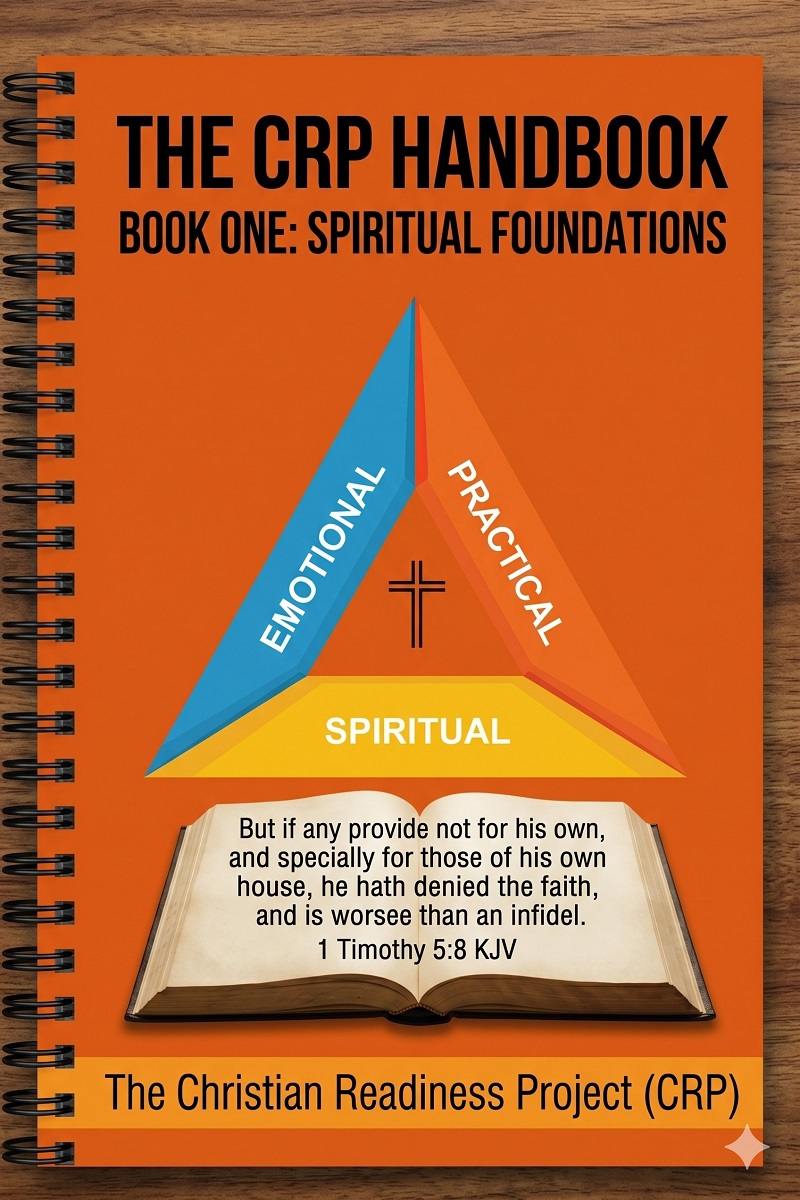
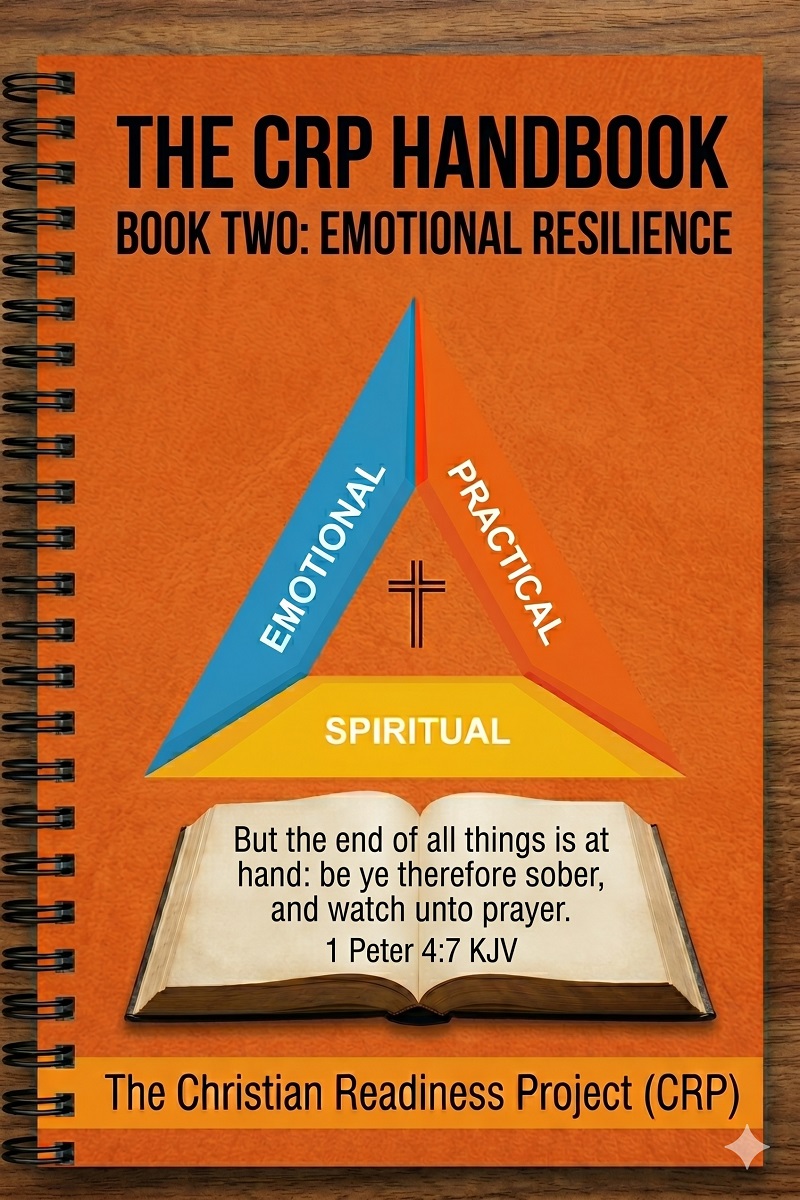
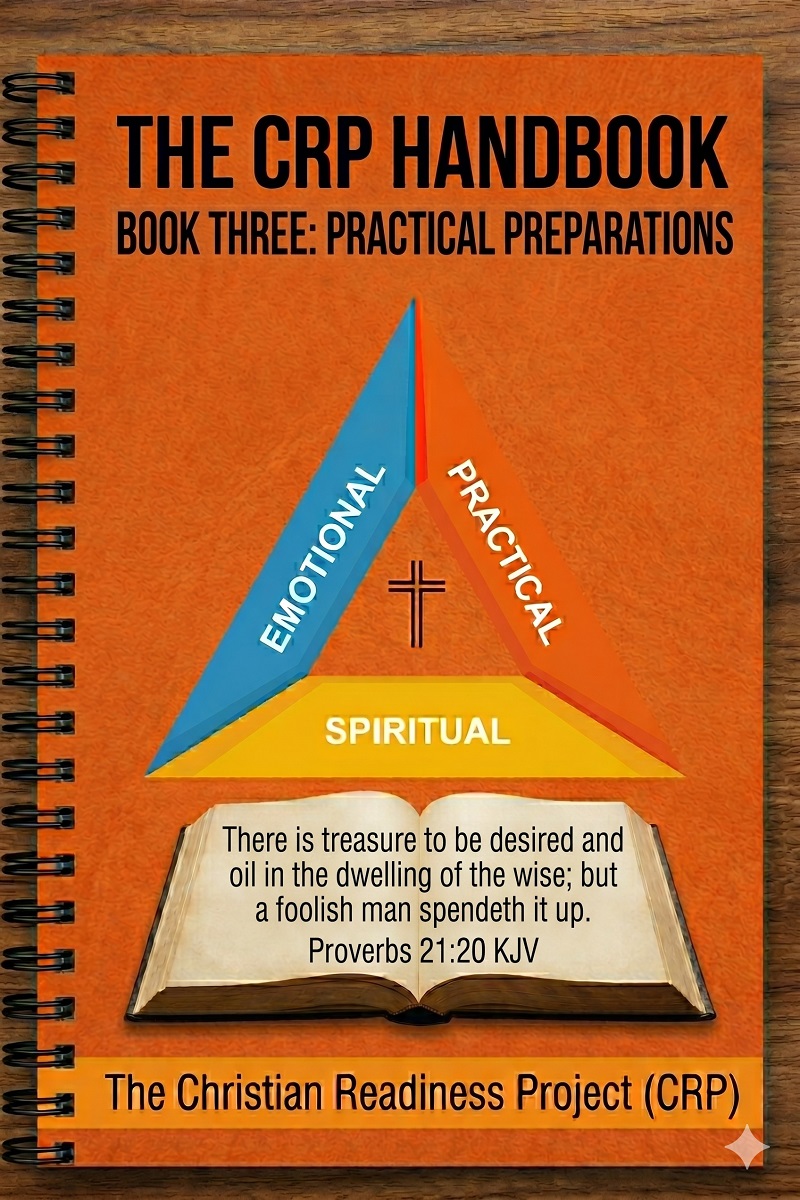
Our mission is structured upon the Christian Readiness (CR) Triad, split into three distinct handbooks and workbooks: Book 1: Spiritual Foundations, Book 2: Personal Resilience, and Book 3: Practical Preparations.
Some of this information will lean into a military tone. Such is my personal background and frame of reference in many things. Some will seek a pastoral tone. That, too, is my personal background and frame of reference in many things.
The Nine Bedrock Principles of Christian Readiness
The following nine principles embody the values and vision of the Christian Readiness Project (CRP). You will see that they are keyed to specific Biblical teachings and concepts. They are not variable based on circumstances or situations. They are deep foundations anchored in bedrock and therefore immutable. Everything we do, represent, teach, or encourage in others finds its basis in these nine principles. They dictate what we do, why we do it, how we do it, and what we encourage others to practice.
1. Faith in God (The Sovereign Anchor)
The absolute cornerstone of the CR Triad is an uncompromised, active faith in the absolute sovereignty of God. Christian Readiness operates in what we call active dependence. We work diligently and prepare responsibly, yet we ultimately rest in God's providential care. Preparation is not a substitute for faith; it is one expression of faithful stewardship. This principle permeates and governs our stewardship responsibilities toward our loved ones, the church, and strangers. True faith demands that we integrate all biblical commands into our preparation plans. We explicitly reject the secular dichotomy that separates spiritual trust from practical action. Under this anchor, the believer utilizes constant prayer, rigorous scripture study, corporate worship, deep fellowship, and intentional witnessing to ensure that every preparation keeps Christ first and His Kingdom foremost. We prepare because we believe God, not because we fear the future.
2. Watchfulness and Discernment (The Prophetic Posture)
Believers are explicitly commanded by Scripture to read the signs of the times and maintain alert situational awareness. This is not an invitation to obsess over sensationalized headlines or fear-mongering media, but a call to a sober, sound mind. We cultivate our spiritual and situational senses to anticipate shifting geopolitical, structural, and environmental stressors before a Critical Incident (CI) manifests. We maintain temporal vigilance precisely because we hold an eternal anticipation, recognizing that earthly crises are but birth pangs pointing toward the ultimate return of our Savior.
3. Hope-Infused Pragmatism (The Resilient Mindset)
This principle governs the psychological and spiritual mindset required to endure severe trials without panicking. It balances clear-eyed honesty about the reality of a fallen world with an unshakeable spiritual optimism rooted in Christ's final victory. Christian Readiness strictly prohibits two extremes: it condemns paralyzing, fear-driven excess that hoards out of a lack of faith, and it equally condemns naive, apathetic wishful thinking that refuses to prepare under the guise of "just trusting the Lord."
4. Righteous Lament (The Emotional Safety Valve)
When a Significant Negative Life-Altering Event (SNLAE) happens, physical resources alone cannot carry the weight of grief. Christians have something more. Scripture gives us permission to lament honestly before God. Biblical lament allows sorrow to be expressed without surrendering hope. CRP explicitly incorporates the biblical tradition of lament. We recognize that processing raw sorrow, devastation, and profound earthly loss before the throne of God is a vital component of emotional resilience. Scriptural grieving prevents spiritual hardening, channels trauma productively, and transforms immense suffering into a refining fire that builds Christlike endurance.
5. Non-Negotiable Crisis Ethics (The Moral Boundaries)
Our behavior during a systemic collapse, emergency, or resource scarcity is governed by an absolute moral boundary line. Worldliness permits a "lone wolf," dog-eat-dog survival mentality where actions are dictated by self-preservation at all costs. Within Christian Readiness, our morality is non-negotiable. Hunger and desperation tempt even good people to cut moral corners. When one’s family is starving, it is difficult to avoid throwing away some of our biblical boundaries, engage in predatory hoarding, or compromising truth to secure physical safety. If we must choose between physical survival and righteous obedience to Christ, we choose righteousness without hesitation.
6. Interdependent Community Focus (The Outward Mission)
Biblical readiness stands in contrast to the isolationist tendencies often found in secular preparedness culture. That does not mean we reject, for instance, the need to shelter from immediate dangers. However, we do not prepare to hide to avoid being engaged with those who may need us. We prepare to minister. Households and congregations must systematically organize their readiness to serve as storehouses of charity, compassion, and physical refuge during a crisis. We build physical buffers so that when an emergency strikes, we are not a liability to our community, but an asset—ready to supply the needs of the vulnerable and turn practical aid into an enduring pulpit for the Gospel.
7. Pragmatic Preparation and Skills (The Tactical Stewardship)
Biblical convictions should produce practical wisdom and useful skills. This principle mandates the disciplined acquisition of the skills and supplies needed to care for our families and serve others. We encourage believers to master basic first aid, communication disciplines (including amateur radio and software-defined radio systems), food preservation, gardening, home security, and specific structural plans for distinct Critical Incidents (CI). This tactical stewardship translates our spiritual obligations into the physical capability required to protect life, shield property, and sustain the helpless. Some of these skills are valuable to daily life and family economics, too. Learning to grow food or manage a backup power system reduces everyday anxiety and financial strain right now without needing a disaster.
8. Detachment Without Disengagement (The Pilgrim Posture)
We operate in this world with a posture of "pilgrim minimalism." We recognize that we are temporary travelers whose true citizenship is in heaven. Therefore, while we aggressively improve our physical properties, build out our resources, and execute complex readiness plans to bless others, we refuse to let our possessions own us. We deliberately root our identity in heavenly treasure. This ensures that if our earthly goods, gear, or properties are completely destroyed or seized during an SNLAE, our core foundation remains entirely untouched and unmoved.
9. Covenantal Legacy (The Generational Horizon)
Christian Readiness refuses to view preparation through the short-sighted lens of a single lifetime. This final principle demands that our spiritual foundations, practical tradecraft, physical resources, and survival wisdom are intentionally and systematically passed down to our children and grandchildren. We want our children and grandchildren to inherit more than supplies and skills. We want them to inherit faith, wisdom, and a pattern of faithful stewardship that will bless generations yet unborn.