LOG ID: #260911-0019
11 September 2026, 12:19 am CDT
This information is presented as a snap-shot of what to expect for the day or to bring us up to speed on recent events.
This is produced with professionals in emergency and disaster fields but offered to all who want to know as important information.
⚠ NOTICE:
For specific hazard tracking, detailed advisories, and ongoing state announcements, individual hazard pages are available on the Alerts tab.
NATIONAL AND GLOBAL OPERATIONAL READINESS AND DISASTER BRIEF FOR CRP READY ROOM
⚠ SPECIAL DISASTER FEATURE: CONTINUING GLOBAL DISASTER & SEISMIC ROUNDUP
Ongoing tracking of major global seismic movements, casualty status, infrastructure stress, and secondary disaster hazards across primary fault lines today, Thursday, August 6, 2026:
- Southern Philippines M6.3 Aftershock Status (Sarangani Island): Emergency teams across Mindanao continue structural integrity audits following yesterday's powerful M6.3 earthquake centered 32 km off Sarangani Island at a depth of 62 km. While no tsunami was generated and immediate fatalities were avoided, trauma centers treated over 40 injuries caused by panic during mass evacuations from public aid distribution centers. Seismic units warn of localized aftershocks along fragile island structures.
- Suez Canal / Egypt M5.0 Shaking: Inspection corps along the Suez Canal maritime transit corridor have cleared main shipping lanes following yesterday's shallow M5.0 tremor near Suez. Ground teams continue evaluating older unreinforced masonry structures across metro Cairo for secondary cracking.
- Guatemala Landslide Contagion (Chiapas M7.3 Tail): In Central America, persistent tropical downpours falling on mountain slopes destabilized by the decaying Chiapas Coast M7.3 aftershock sequence have triggered severe mudslides. Mountain rescue teams in western Guatemala are navigating blocked transit routes, with dozens of rural homes engulfed and secondary infrastructure severed.
- Venezuela Earthquake Recovery (Mw 7.2 / 7.5 Doublet): Six weeks post-doublet along the San Sebastián fault axis, UN OCHA SitReps maintain official casualty tolls at 3,685 fatalities and over 16,000 injuries. Multi-national engineering units continue installing emergency off-grid water purification systems to support 6.8 million displaced residents facing destroyed municipal utilities.
- Continental United States Baseline Seismic Activity: Domestic USGS sensors record baseline crustal pressure releases, including a M2.8 tremor near Petrolia, California, micro-quake swarms within the Yellowstone volcanic basin, and low-level settling in the Illinois and Lake Michigan basins. Zero domestic structural compromises have occurred.
1. METEOROLOGICAL MATRIX: WESTERN HEAT DOME PEAKS, EASTERN CONVECTIVE FLOODING & TROPICAL BASINS
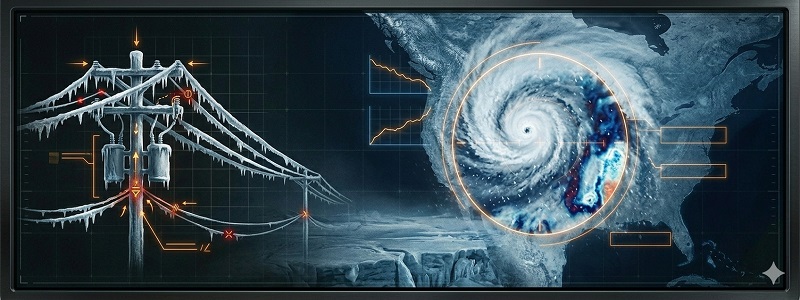
An expansive atmospheric heat ridge maintains oppressive thermal stress across the Western U.S. today, August 6, 2026, while frontal boundaries drive intense convective rain bands across eastern tiers:
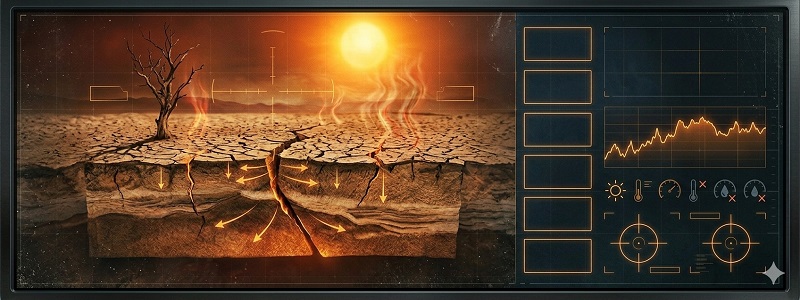
- Western Extreme Heat Ridge: Over 40 million residents remain under active Excessive Heat Warnings and Major HeatRisk advisories across the West Coast, Great Basin, and Desert Southwest. Peak afternoon temperatures will reach 120°F–124°F in Death Valley, 115°F–118°F in Phoenix, Las Vegas, and Palm Springs, and push past 100°F–105°F across interior valleys in California, Oregon, Washington, Utah, and Montana. Saturated boundary-layer moisture keeps overnight low temperatures stuck in the high 80s, removing vital physical recovery windows.
- Southeastern Convective Squalls & Flash Flooding: A slow-moving, moisture-laden frontal boundary extending across Georgia, the Carolinas, and Virginia is generating severe afternoon storm clusters. Localized rainfall rates exceeding 2 to 3 inches per hour are driving acute flash flooding liabilities for low-lying roadways and urban drainage basins along the I-85 and I-95 corridors.
- Atlantic & Gulf Tropical Suppression: The National Hurricane Center confirms Atlantic and Gulf tropical cyclogenesis remains completely locked down by deep Saharan dry air layers and hostile vertical wind shear, with 0% tropical storm formation expected over the next seven days. Offshore Pacific swells from Hurricane Genevieve continue generating dangerous high-risk rip currents along Southern California beaches.
2. ATMOSPHERIC & WILDFIRE HAZARDS: WASHINGTON EMERGENCY DECLARATION & SMOKE INUNDATION
Desiccated fuel beds, high ambient temperatures, and dry lightning threats maintain high wildland fire severity across western states:
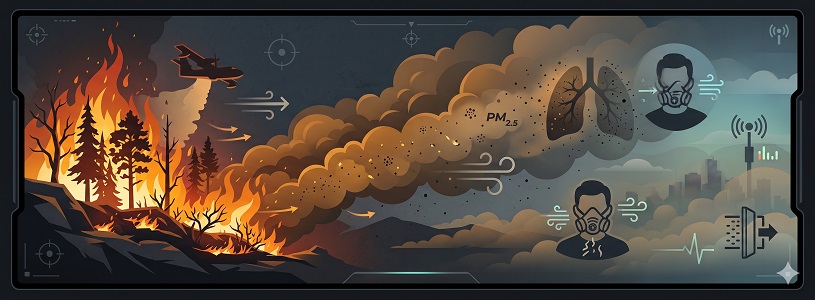
- Washington State Emergency & Burn Ban: Washington Governor Bob Ferguson maintains an active State of Emergency and statewide outdoor burn ban as multiple large wildland blazes burn uncontained across eastern counties. Critical fire weather warnings remain active across Oregon (Rowe Creek Complex), Idaho, and Northern California.
- NIFC PL3 & Particulate Smoke Inundation: The National Interagency Fire Center (NIFC) holds at Preparedness Level 3 (PL3). Dense particulate smoke plumes from Pacific Northwest blazes continue drifting southeastward, creating Code Yellow (Moderate) to Code Orange (Unhealthy for Sensitive Groups) Air Quality Index (AQI) readings across the Northern Plains and Upper Midwest.
3. SPACE WEATHER DISPATCH: NOMINAL MAGNETOSPHERIC BASELINES
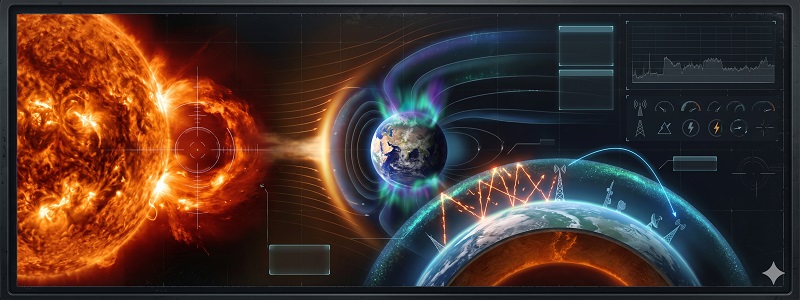
Heliophysics surveillance satellites report quiet to unsettled outer-atmosphere parameters facing Earth today:
- Geomagnetic Field Status: Planetary K-index indicators remain at quiet baselines ($Kp < 3$) with solar wind velocities hovering around 360 km/s. Zero active geomagnetic storm watches are in effect from NOAA's Space Weather Prediction Center (SWPC).
- Solar Disk Activity: Background X-ray flux outputs remain in low C-class ranges, with forecasters tracking simple sunspot clusters rotating across the visible disk.
4. SEISMIC, GEOLOGICAL & VOLCANIC MONITORING
Global seismic and tectonic tracking is detailed in today's lead special feature above. Baseline monitoring continues across domestic networks:
- Domestic & Global Fault Summary: USGS real-time tracking confirms no immediate tsunami threats generated from recent Pacific events. All U.S. volcanic alert codes remain at normal baseline parameters.
5. CRITICAL INFRASTRUCTURE & UTILITY GRID STATUS: 17-STATE DOE EMERGENCY ORDER & TELECOM RISKS
Sustained summer heat loads and telecommunications vulnerabilities continue to dictate emergency grid management:
- 17-State DOE Grid Emergency Order: DOE Order No. 202-26-37 remains active, authorizing the Southwest Power Pool (SPP) to deploy idle, backup power generation resources across 17 states (North Dakota to Texas, west to Arizona and Utah). The order allows grid operators to run reserve units to prevent Energy Emergency Alert Level 3 (EEA 3) rolling blackouts under extreme peak air-conditioning loads.
- Telecom Single-Carrier Risks: Following recent nationwide cellular service failures (including major T-Mobile outages impacting 911 routing in metropolitan centers), municipal emergency managers urge secondary carrier redundancies for all emergency communications.
6. INDUSTRIAL, CHEMICAL & HAZMAT INCIDENTS
Hazardous materials emergency tracking boards report nominal baseline operations nationwide today:
- National Response Center Log: No critical industrial chemical spills, major refinery explosions, or toxic transportation derailments reported across the continental U.S. today.
7. SUPPLY CHAIN, FREIGHT & DEFENSE STOCKPILE CONCERNS
Commercial shipping channels maintain flow under summer heat warnings, while defense quartermasters flag strategic supply depletion:
- U.S. Defense Munitions Stockpiles: Military logistics analysts and Pentagon advisories express growing concern over heavily depleted American defense stockpiles—specifically 155mm artillery ammunition, air defense interceptors, and anti-tank munitions—following sustained transfers to overseas allies and active forward deployments.
- Commercial Freight & Pavement Limits: Major trucking corridors (I-10, I-40, I-80) remain open, though DOT authorities warn fleet operators to monitor tire blowout risks under extreme pavement surface heat across western states.
8. PUBLIC HEALTH & BIOSECURITY: MAJOR CDC ALERTS ON SALMONELLA JALAPEÑOS & CYCLOSPORIASIS LETTUCE
Federal health agencies (CDC/FDA) have issued major food safety alerts alongside ongoing biological outbreak warnings:
- NEW CDC ALERT — Multistate Salmonella Javiana Outbreak (Jalapeño Peppers): The CDC and FDA issued an urgent public health alert regarding a rapidly expanding multistate outbreak of Salmonella Javiana tied to contaminated fresh jalapeño peppers. Official metrics log 345 confirmed cases across 27 states and 36 hospitalizations. Traceback investigations pinpoint jalapeños grown in Sinaloa, Mexico, and distributed nationwide by Coast Citrus Distributors. Major restaurant chains (including QDOBA) have removed jalapeño peppers from service. Consumers and retailers are directed to immediately discard recalled produce. Symptoms include high fever, severe bloody diarrhea, and dehydration.
- CDC UPDATE — Massive Cyclospora Outbreak (Iceberg Lettuce): The CDC and FDA issued a major update expanding the ongoing Cyclospora cayetanensis parasitic outbreak linked to Taylor Farms de Mexico shredded iceberg lettuce. Official totals have surged to 6,358 confirmed cases, 278 hospitalizations, and 2 deaths across 15 states (with 6 new states added: AR, IA, MO, NE, NH, NC). Recalled product was distributed to retail packages (Marketside at Walmart) and food service suppliers (including Taco Bell). Consumers are reminded that standard water washing cannot remove microscopic Cyclospora oocysts bound to leaf surfaces.
- Record Congo Ebola Outbreak Warning: Health authorities report a record spike in Ebola Virus Disease cases in the Democratic Republic of Congo (DRC). U.S. biosecurity experts cite this outbreak as an urgent warning for American citizens to maintain strict personal sanitation, hygiene practices, and international travel vigilance to mitigate global pathogen transmission risks.
- American Red Cross National Blood Crisis: The American Red Cross maintains an active National Blood Crisis declaration due to a severe, nationwide blood shortage caused by heat-related blood drive cancellations. Hospitals face critically low inventories for emergency surgeries and trauma care.
- Tragic Record Pace for Florida Child Drowning: Florida health officials sound a solemn alarm as childhood drownings reach 74 deaths already in 2026—on pace to break last year's record of 120 fatal child drownings. Authorities urge families to enforce strict, uninterrupted physical supervision around all pools and open water.
9. EMERGENCY DECLARATIONS, LEGAL DIRECTIVES & PUBLIC POLICY
Federal power emergency orders and state disaster executive proclamations active today:
- Federal Power Act Section 202(c) Invocation: DOE Order No. 202-26-37 legally mandates generator dispatch rules across 17 states. Concurrently, Washington State's wildfire emergency declaration and gubernatorial heat declarations across western/southern states suspend utility disconnect rules and activate emergency operations centers.
10. EMERGENCY FINANCIAL SYSTEMS, BANKING & RELIEF FUNDING
Financial processing routing and disaster loan assistance portals report baseline status:
- Financial Grid & Payment Systems: Electronic card transaction networks (Visa, Mastercard) and ACH banking clearinghouses report normal operations. SBA low-interest disaster loan portals remain open for declared storm recovery zones.
11. WAR NOTICE: NATO DRONE INTERCEPTIONS, FINLAND AIRSPACE & MILITARY HOTSPOTS (OSINT)
Open-source intelligence monitoring desks flag critical NATO border engagements, airspace violations, and global conflict escalations:
- Romania NATO Airspace Drone Interceptions: Following Romanian Air Force F-16 fighter jets shooting down Russian Shahed attack drones over Romanian territorial waters in the Sulina–Chilia area, defense analysts continue to evaluate whether these incursions represent accidental stray munitions targeting Ukrainian Danube ports or a deliberate Russian test of NATO's air defense resolve and Article 5 readiness.
- Finland Airspace & Baltic Probing: Finnish defense forces report heightened Russian drone reconnaissance incursions and aggressive GPS/telecom jamming along Finland's eastern border and Baltic shipping lanes.
- U.S. Forward Troop Deployments & Defense Stockpiles: U.S. European Command (EUCOM) and CENTCOM maintain high-readiness forward troop postures. Military logistics chiefs warn that sustained international transfers have severely depleted U.S. strategic ammunition reserves, creating vulnerabilities if multi-theater conflicts erupt simultaneously.
- Civil Disruptions & Violent Activity: Law enforcement desks report a surge in localized violent crime, urban civil disputes, and soft-target threats over recent warm summer evenings, requiring heightened situational awareness in public spaces.
12. GOVERNMENT CYBERSECURITY ALERTS: JOINT FBI/CISA/EPA WARNING ON WATER SYSTEM SCADA/PLC TERRORISM
Federal cybersecurity defense agencies maintain active emergency advisories following coordinated cyber terrorism targeting municipal water systems:
- Multi-State Water System Cyber Attack Surge: A joint Public Service Announcement from the FBI, CISA, and EPA confirms ongoing cyberattacks targeting Water and Wastewater Systems (WWS) across at least seven U.S. states. Hostile threat groups (specifically Iranian-affiliated CyberAv3ngers / IRGC-linked actors under CISA Advisory AA26-097A) are actively exploiting internet-exposed Programmable Logic Controllers (PLCs) from Rockwell Automation/Allen-Bradley, Schneider Electric, and Siemens.
- 30+ Minnesota Utilities & Operational Disruptions: Over 30 Minnesota water utilities (including Braham, Plymouth, South St. Paul, and Maple Plain) faced operational compromises when attackers exfiltrated project files, locked out plant operators by resetting passwords, and altered cellular modem IP configurations. Affected communities suffered pressure drops, localized tank overflows, and boil-water notices before switching to manual lever operations.
- Rockwell PLC Hard Reset Directives: Rockwell Automation issued emergency recovery protocols for MicroLogix 1400 series PLCs, directing operators that compromised units can only be restored by physically removing main power and internal memory batteries to wipe malicious IP configurations. CISA mandates that all water operators immediately isolate PLCs from direct public internet routing and enforce MFA VPN gateways.
- CISA KEV Catalog Additions: CISA enforces Binding Operational Directive 26-04 patch rules for critical vulnerabilities including Cisco Secure Firewall Management Center (CVE-2026-20316), Check Point SmartConsole (CVE-2026-16232), and Fortinet FortiOS (CVE-2025-68686), alongside ongoing remediation for Microsoft SharePoint (CVE-2026-58644).
13. FAITH-BASED & NGO RELIEF OPERATIONS: EMERGENCY BLOOD DONATION CALL
Christian readiness networks and NGO relief teams mobilize community support across active crisis sectors:
- Emergency Church Blood Drives: In response to the American Red Cross National Blood Crisis, faith-based organizations and local congregations are hosting emergency air-conditioned blood drives to replenish depleted regional hospital blood banks.
- Heat Outreach & Hydration Units: Salvation Army and local ministry teams continue operating mobile hydration units and day-cooling shelters for unhoused and vulnerable citizens during the ongoing heat dome.
14. TACTICAL READINESS POINT: PRODUCE HYGIENE PARAMETERS & OT AIR-GAPPING
Key operational standards for household food safety and digital infrastructure resilience:
The Produce Sanitation & System Air-Gap Rule: The simultaneous CDC alerts for Salmonella in jalapeño peppers and Cyclospora in iceberg lettuce highlight two vital food safety principles: while Salmonella bacteria can be destroyed by standard cooking (heating produce to an internal temperature of at least 165°F / 74°C), microscopic Cyclospora oocysts bind tightly to leaf surfaces, meaning raw produce washing alone cannot guarantee safety. Immediately discard all recalled produce. On the infrastructure side, the ongoing joint FBI/CISA/EPA alert detailing cyber terrorism against 30+ Minnesota water systems proves that no municipal SCADA system or PLC interface should ever sit exposed on a public IP address. Maintain at least 1 gallon of stored drinking water per person per day for a minimum 14-day window to insulate your household against sudden cyber-driven municipal water disruptions.
OFFICIAL RESOURCE DIRECTORY (EXTERNAL LINKS)
CDC Pathogen & Food Safety Outbreaks
Jalapeño Salmonella Alerts, Cyclospora Lettuce Bulletins, & Recall Lists
CDC.gov/outbreaks →
CISA Cyber Defense & Water Security
Emergency Water Utility PLC Alerts, SCADA Guidance, & KEV Catalog
CISA.gov/water →
USGS Real-Time Earthquake Tracking
Philippines M6.3 Dispatches, Global Fault Monitoring, & Regional Tremors
Earthquake.USGS.gov →
National Interagency Fire Center (NIFC)
Wildfire Preparedness Levels, Washington Emergency Status, & Smoke Maps
NIFC.gov / Weather.gov →
 [ View Asset ]
 [ View Asset ]
 [ View Asset ]
 [ View Asset ]
 [ View Asset ]
 [ View Asset ]
 [ View Asset ]
 [ View Asset ]
 [ View Asset ]
 [ View Asset ]
 [ View Asset ]
 [ View Asset ]